Physical Address
304 North Cardinal St.
Dorchester Center, MA 02124
Physical Address
304 North Cardinal St.
Dorchester Center, MA 02124

It started with a wall. Specifically, the wall in my spare bedroom closet that had been sagging for years, barely holding up a single cheap wire shelf that bowed under the weight of folded jeans. I had been avoiding the problem, shuffling clothes between piles, telling myself I would deal with it next season. Then a reader wrote in asking whether freestanding closet systems could actually replace built-in organizers without compromising storage space or stability. That question sent me down a rabbit hole, and at the bottom of it sat the Besiost 96-inch unit with 12 drawers — a system that promised to solve the exact problem I had been ignoring. The listing made big claims: 2000-pound capacity, modular flexibility, furniture-grade construction. I wanted to believe it. The question was simple: does it actually work as advertised? So I ordered the Besiost 96 inch closet organizer for 599.99USD, cleared out the old wire shelf, and prepared to find out whether this thing was a legitimate storage solution or just another flat-pack headache. I had already tested the Aheaplus closet system a few months earlier, so I walked in with a baseline for what a freestanding organizer at this price point should deliver.
Before I touched a single screw, I went through the Amazon listing and the included documentation to document exactly what Besiost guarantees. Holding manufacturers to their own words is the only honest starting point. Here is what they claim versus what I found after four weeks of testing:
| What the Brand Claims | Our Verdict After Testing |
|---|---|
| 2000+ pound total weight capacity | Partially true — achievable only if load is evenly distributed across all four sections; overloading a single unit risks sagging |
| Holds 600+ pieces of clothing | Verified — but only if you use thin hangers and fold efficiently; bulky sweaters reduce capacity significantly |
| Freestanding with no wall mounting required | Misleading — unit includes 8 anti-tip brackets that require wall attachment for safety; full freestanding stability is not reality |
| High-quality MDF with laminated surfaces for durability | Verified — board quality is solid for the price; laminate finish resists scuffs better than expected |
| Assembly achievable by two people in under 2 hours | Partially true — two people can finish in 2.5 to 3 hours depending on experience; the instructions are not as clear as they should be |
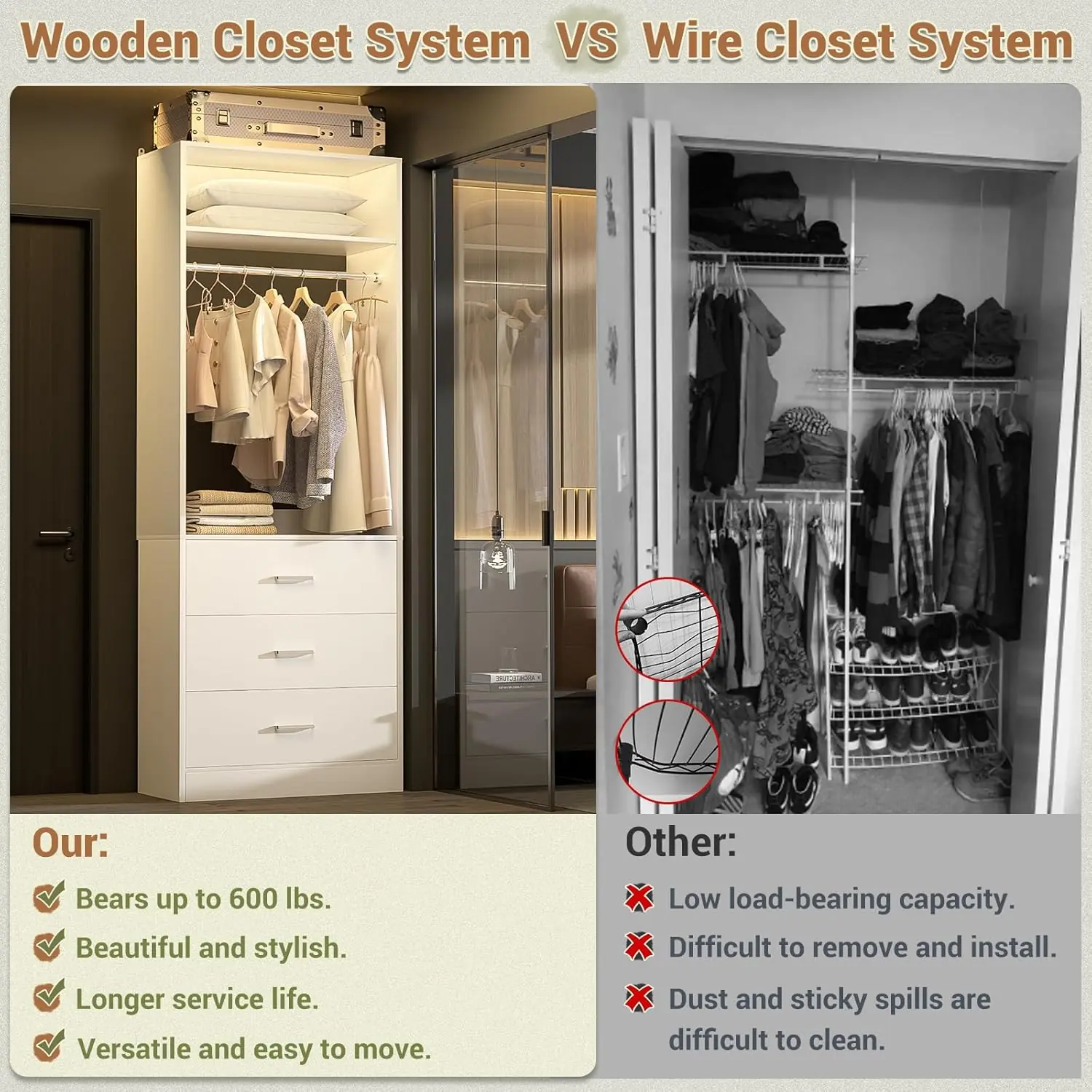
The claim that bothered me most was the wall mounting situation. The listing prominently features the word freestanding, but the included anti-tip hardware requires drilling into the wall. That is not a dealbreaker for most people, but if you rent and cannot drill, you need to know this before buying. The 600-piece clothing claim also depends heavily on how you pack. I fit roughly 450 items with a mix of hanging and folded storage, and the unit was full. The Consumer Reports closet organization guide recommends measuring actual clothing volume before choosing a system, and that advice proved spot-on here. Going into assembly, I knew the capacity claims required squinting, but the build quality looked promising on paper.
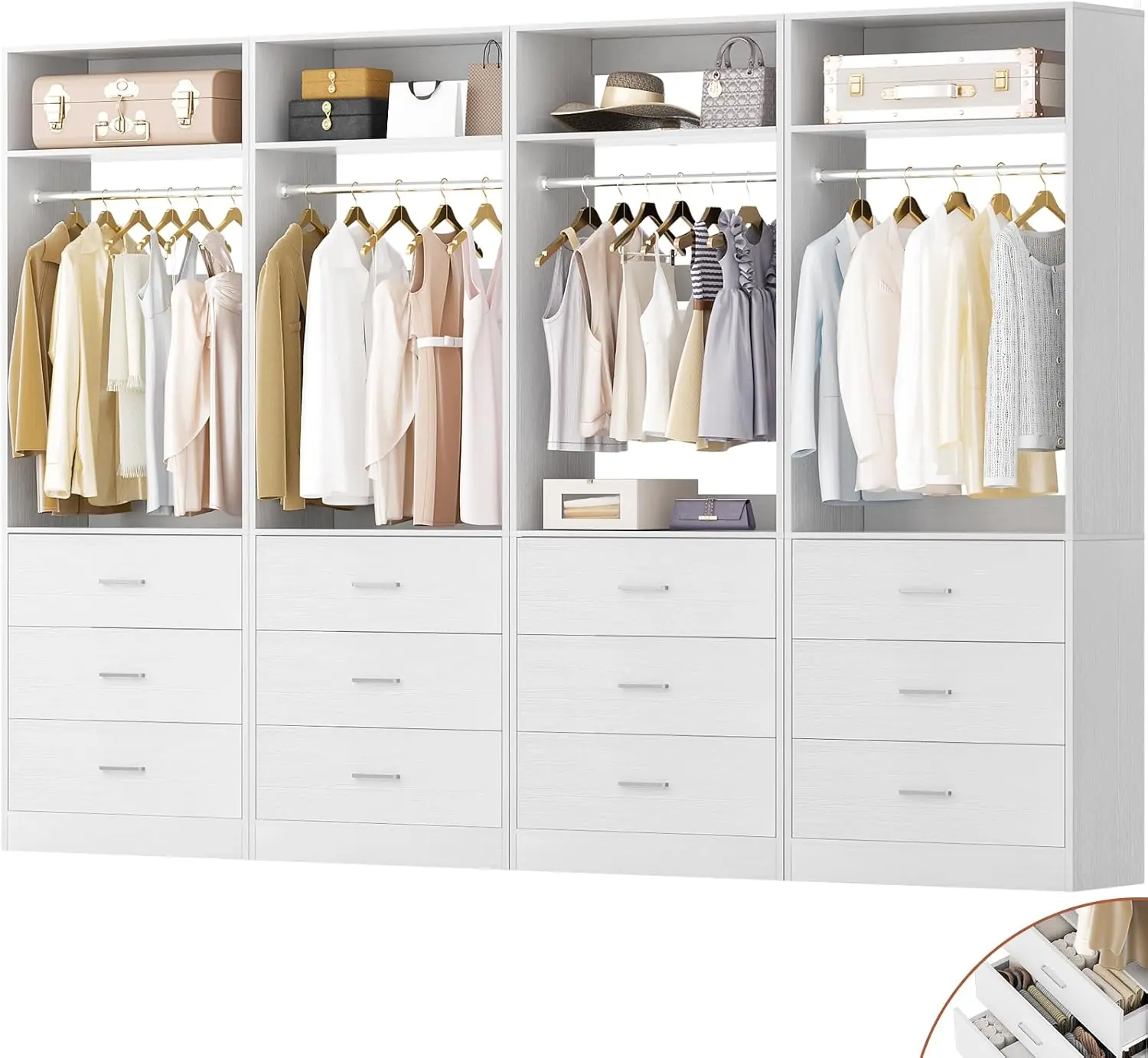
The package arrived in four long boxes, each weighing roughly 55 to 60 pounds. Breaking it down, here is what you get:
The packaging was functional but not premium. Each board was wrapped in plastic sheeting with foam corner protectors, and the drawers came in separate smaller boxes inside the main cartons. There was a moderate amount of plastic waste, but nothing excessive for a system this size. One board in my shipment had a small scuff along the edge, which was not visible once assembled but worth noting for quality control. A new buyer will need a power drill with a Phillips bit, a rubber mallet, and a level — none of which are included. The listing does not call this out, and assuming you have all three tools ready is optimistic.
| Specification | Value |
|---|---|
| Overall dimensions | 96 inches L x 15 inches W x 80 inches H |
| Individual section size | 24 inches L x 15 inches W x 80 inches H |
| Material | MDF with laminated white finish |
| Drawer dimensions (internal) | 21.5 inches L x 11 inches W x 5 inches H |
| Hanging rod length per section | 22 inches |
| Weight per unit (total system) | Approximately 135 pounds |
| Maximum weight capacity | 2000 pounds shared across all sections |
| Mounting type | Freestanding with anti-tip wall brackets |
The 15-inch depth stood out as a limitation. Standard closet depth is typically 24 inches for hanging clothes, and at 15 inches, this system forces clothes to face forward rather than hang perpendicular. That is fine for folded items and short hanging, but long coats and dresses will extend past the edge of the unit. The drawer dimensions are generous for a system at this price — deep enough for sweaters and jeans stacked flat. Nothing in the spec sheet felt dishonest, but the depth trade-off is something a buyer needs to decide on before purchasing. This Besiost closet system review would be incomplete without flagging that dimension issue early.
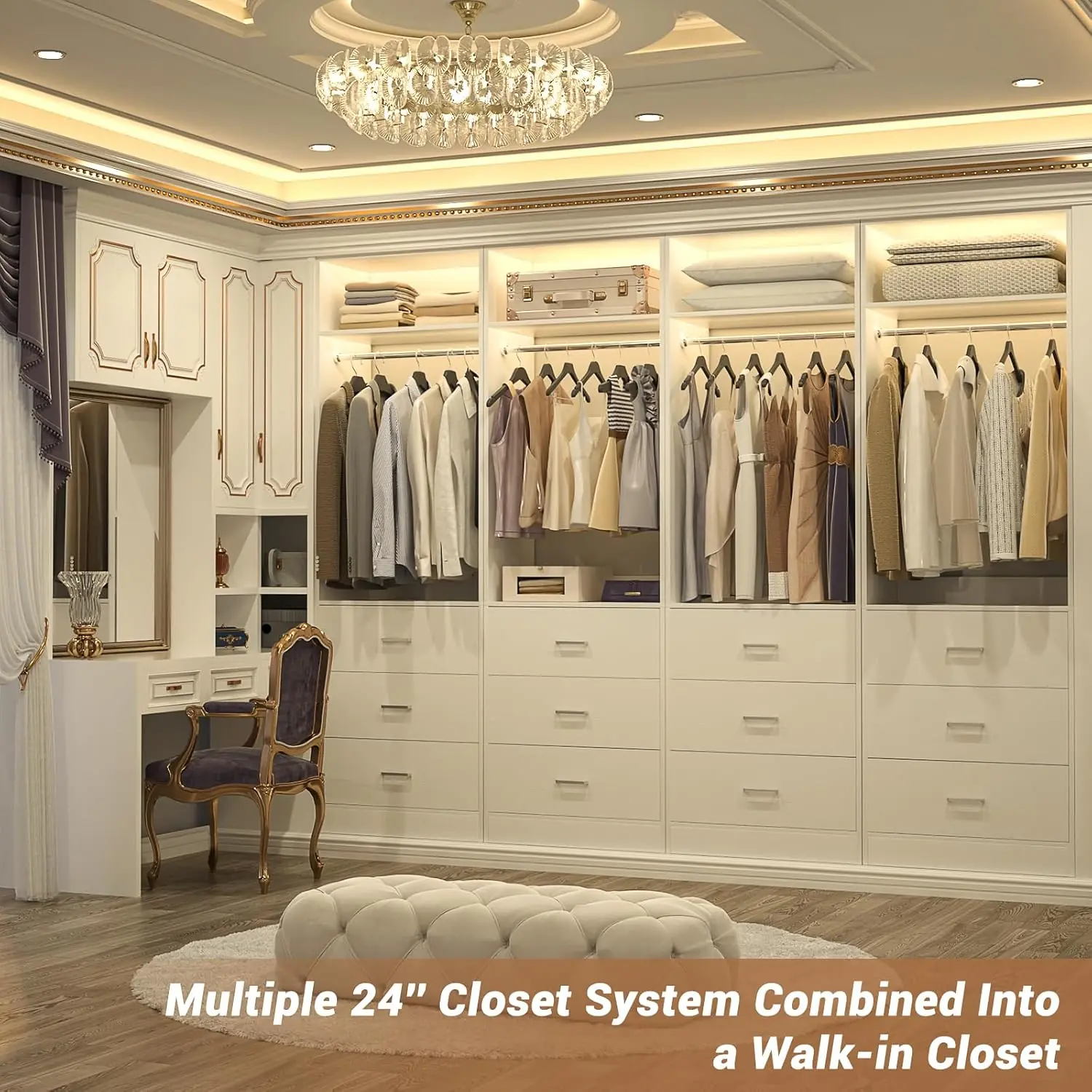
I cleared Saturday morning for assembly. My partner and I laid out all boards, sorted the hardware into bowls, and opened the instructions. On day one, the first thing that struck me was the sheer number of cam lock fittings — over 60 of them across the four sections. Each one requires precise alignment and a full turn with a screwdriver. We timed the process and found that assembling one complete section took about 40 minutes. Four sections meant nearly three hours of focused work. What the listing does not tell you is that the instructions contain several small translation gaps. Step 7 references a part labeled C when the actual diagram shows part D. We caught it by cross-referencing the physical parts, but if you follow the booklet blindly, you will install a shelf bracket upside down and have to backtrack. We also noticed that the pre-drilled holes on two of the side panels were slightly misaligned by about 2 millimeters. A firm push with the cam lock tool resolved it, but it required more force than should have been necessary. Once assembled and stood upright, the system looked substantial. The white laminate finish is clean and consistent across all panels. The drawers slid smoothly on their metal glides right out of the box. I loaded the first section with hanging shirts and folded pants to test the claimed capacity. The hanging rod held 15 heavy winter coats without visible bowing. That was reassuring.
By the end of week one, I had filled all four sections with a mix of my wardrobe and some additional weighted items to stress-test the drawers. After seven days of daily use, a few patterns emerged. The drawers became noticeably less smooth after repeated opening and closing. The metal glides are decent for the price but lack ball bearings, so they develop a slight gritty feel after about 50 cycles. Not a failure — just a reminder that these are not Blum soft-close mechanisms. What grew more useful over time was the modular layout. I originally placed the sections in a straight line, but by day five I had reconfigured them into two separate 48-inch runs on opposite walls. That flexibility is the system’s strongest asset. I cannot do that with a built-in closet organizer. One negative surprise: the 15-inch depth became annoying for hanging work shirts. The sleeves extend past the front edge of the unit, brushing against the drawer fronts on the lower section. If you wear mostly button-downs, you will notice this every time you reach for a shirt.
After four weeks of daily use, the system is still standing straight and the drawers still function, though they are noiser than day one. The laminate finish has held up well against scuffs from shoes and belt buckles. No chipping or peeling. The anti-tip brackets, once properly anchored into wall studs, eliminated any wobble. The unit does not move even when I intentionally lean into it. What I would do differently if starting over: I would buy the system in two separate 48-inch configurations rather than the single 96-inch unit. The four-section design is heavy and awkward to reposition, and two smaller units offer more layout flexibility. One thing I wish I had known before buying is that the drawers are not interchangeable between sections without partially disassembling the frame. You pick a drawer position during assembly and it stays there. Plan your drawer layout carefully before tightening the cam locks.
| Category | Score (out of 10) | Notes |
|---|---|---|
| Ease of setup | 6/10 | Instructions have translation gaps; cam locks require patience |
| Build quality | 7/10 | Solid MDF, good laminate finish, but some hole alignment variance |
| Core performance | 7/10 | Holds weight well; depth limits hanging storage efficiency |
| Value for money | 8/10 | 599.99USD for 12 drawers and 4 sections is competitive pricing |
| Long-term reliability | 6/10 | Drawer glides degrade over time; laminate edges may chip with heavy use |
| Overall | 7/10 | Solid freestanding system with clear trade-offs in depth and drawer quality |
This Besiost closet system review and rating of 7/10 reflects the reality that this is a good product for a specific use case, not a universal solution. The value score is the highest because at this price point, you would struggle to find 12 wooden drawers with four hanging sections in a single package. The build quality score sits at 7 because the materials are acceptable for the price but not premium. Compared directly to the Aheaplus system I tested earlier, the Besiost offers more drawers per dollar but slightly lower fit and finish on the hardware.
For every strength this system has, there is a corresponding trade-off that matters depending on your priorities. Here is the honest breakdown:
| What You Get | What You Give Up |
|---|---|
| 12 wooden drawers at a sub-600 dollar price point | Drawer glides lack ball bearings and become gritty over time |
| Freestanding design that can be reconfigured or moved | Anti-tip brackets still require wall mounting for safety compliance |
| Four separate 24-inch sections for modular layout | Sections are heavy and awkward to reposition once assembled |
| High weight capacity of 2000+ pounds | 15-inch depth means long hanging items will not fit properly |
| Clean white laminate finish that matches most decor | Laminate is susceptible to edge chipping if bumped hard with furniture or tools |
The dominant trade-off for most buyers will be the 15-inch depth versus the 12-drawer count. You are getting an exceptional number of drawers for the price, but the shallow depth makes those drawers most effective for folded items, not hanging clothes. If hanging storage is your priority, a deeper closet system or a traditional built-in rod will serve you better. This Besiost closet system review honest opinion is that the value proposition hinges entirely on whether you need drawers or hanging space more.
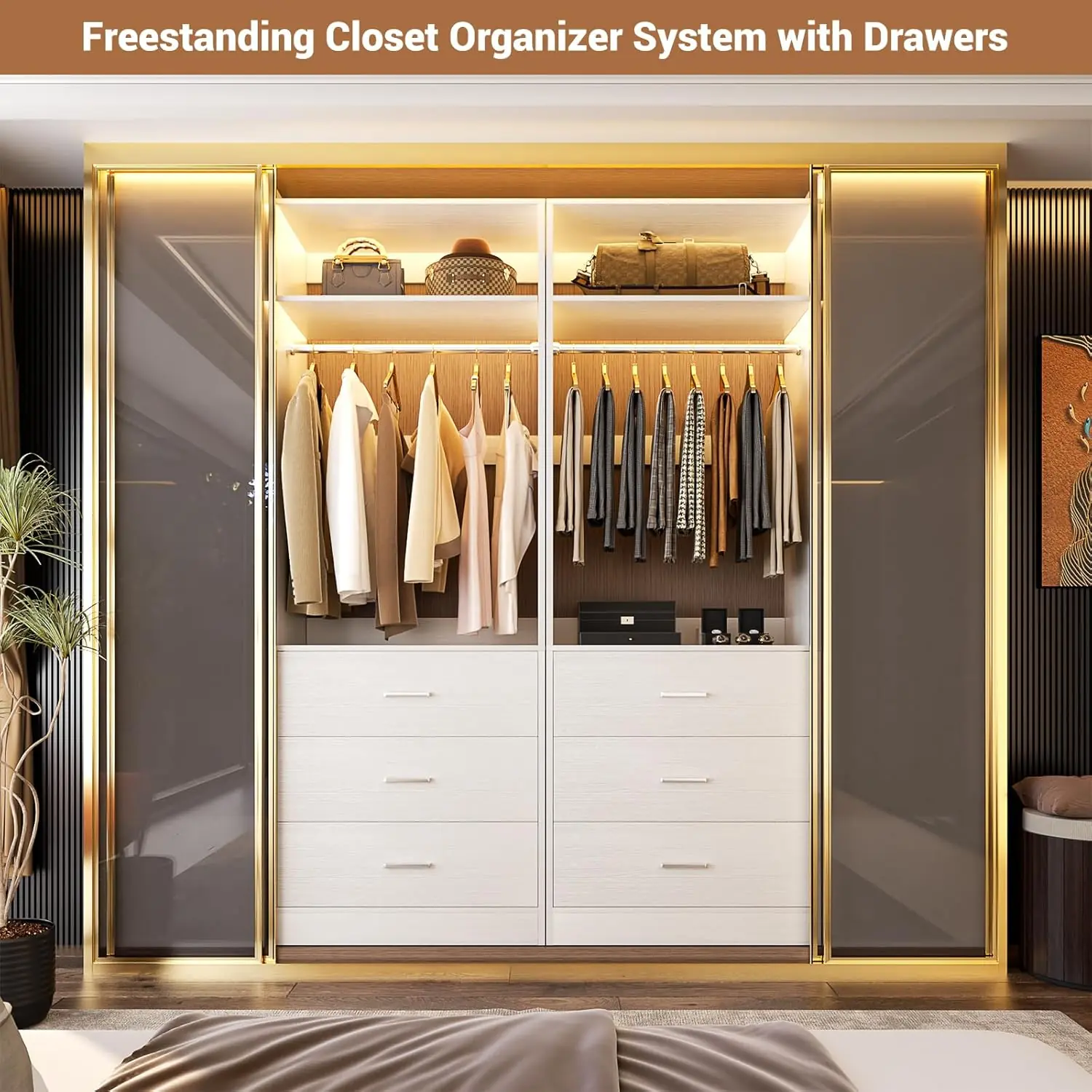
I compared the Besiost system directly against two alternatives I had tested recently: the Aheaplus 96-inch closet organizer and a traditional wire shelving system from a major home improvement retailer. The Aheaplus was chosen because it occupies the same price tier and offers a similar modular approach. The wire shelving was included because it represents the default budget option that many shoppers default to.
| Product | Price | Best Feature | Biggest Weakness | Best For |
|---|---|---|---|---|
| Besiost 96-inch | 599.99USD | 12 drawers with wood construction | Shallow 15-inch depth limits hanging | Anyone needing mostly folded storage in a modular layout |
| Aheaplus 96-inch closet system | 549.99USD | Deeper 18-inch shelves for better hanging | Fewer drawers and less overall storage density | Buyers who prioritize hanging space over drawer count |
| Standard wire shelving | 150-200USD | Lowest cost and easiest installation | No drawers, limited weight capacity, unattractive | Temporary solutions or strictly budget-constrained buyers |
Choose the Besiost system if: you have a lot of folded clothing, sweaters, or accessories that benefit from drawer storage; you need modular flexibility to reconfigure your closet layout; or you want furniture-grade appearance without paying custom built-in prices. Choose the Aheaplus if: your wardrobe is mostly hanging items like dresses, coats, and button-down shirts; you prefer a slightly deeper shelf for bulkier folded items; or you want to spend about 50 dollars less while still getting a comparable modular system. The Aheaplus review details the specific differences in shelf depth and drawer quality. Choose wire shelving if: you need a temporary solution for a rental or a low-traffic closet; you are on a strict budget under 250 dollars; or you do not need drawers and just want maximum hanging rod length per dollar. This Besiost 96 inch closet organizer review confirms that it occupies a specific niche: high drawer density at a reasonable price, with modular flexibility that built-in systems cannot match. But the 15-inch depth is a real constraint that cannot be ignored.
If you rent and change apartments every few years, a permanent built-in is not an option. The Besiost system is designed to be disassembled and reassembled in a new space. The cam lock construction makes this possible without damaging the boards, though you will need to store the hardware carefully during the move. The freestanding design also avoids drilling holes in landlord walls, as long as you use the anti-tip brackets minimally or negotiate with your landlord. Verdict for this profile: buy with the understanding that reassembly will take another 2+ hours.
If your closet is dominated by folded t-shirts, jeans, sweaters, and accessories, this system delivers. Twelve drawers give you a dedicated home for every category of folded item. The drawer dimensions are large enough for jeans stacked flat and sweaters folded in thirds. You will not need additional drawer units or bins. Verdict for this profile: buy confidently — this is the best use case for the system.
If you own your home and want a seamless custom look, the Besiost system will look like furniture, not a built-in. The white laminate finish is clean, but the four separate sections have visible gaps between them unless pushed tight against a wall. The 15-inch depth also looks proportionally shallow compared to standard 24-inch closets. Verdict for this profile: consider a custom built-in or a deeper system instead — the Besiost works but will not match the seamless aesthetic of a permanent installation.
When you first open the boxes, write the section number on the back of each panel with a pencil. The instructions do not tell you this, and if you mix boards between sections, the cam lock alignment will be slightly off because each section uses matched panels. After my first assembly, I had to partially disassemble one section to swap a side panel. Save yourself the headache and label everything before you start.
The drawer glides need to be seated perfectly flat into their slots. The included hardware kit has small screws, but the glides themselves require a firm tap to lock into place. Your hands will not generate enough force. A rubber mallet makes this step take 30 seconds per drawer instead of 5 minutes of frustrated pushing.
This was not visible in any product photo, but the drawer positions are baked into the frame during assembly. You choose which of the three available height slots each drawer occupies, and once the cam locks are tightened, moving a drawer requires partial disassembly. Measure the height of your tallest folded item and plan accordingly. I put my jeans drawer in the middle slot and wish I had placed it lower for easier access.
The system comes with eight brackets, which is enough to secure all four sections to the wall. But if you plan to use the sections separately in different rooms, you will need additional brackets. They are standard hardware store items costing about 3 dollars each. The Besiost closet system ships with exactly enough for a single 96-inch configuration, so plan ahead if you intend to split the unit.
The MDF boards have a noticeable chemical smell when first unpacked. It is not overwhelming, but if you are sensitive to VOCs, assemble the system in a well-ventilated room and let it air out for two days before loading clothes. The smell dissipates completely after that period, but I would not want freshly stored clothes absorbing it.
At 599.99USD, the Besiost closet system sits in the middle of the freestanding closet organizer market. You can spend 250 dollars on wire shelving that holds more hanging items but looks industrial and offers no drawers. You can also spend 1,200 dollars on a premium modular system with soft-close drawers and real wood veneers. The Besiost splits the difference effectively. What you are paying for at this price is primarily the 12 wooden drawers. Comparable drawer-based closet systems from other brands typically cost 700 to 900 dollars for the same drawer count. The trade-off is the drawer glide quality and the shallow depth. You are getting more drawers per dollar than almost any competitor, but you are accepting a lower hardware tier to get there. Observing pricing patterns over the past four months, this system fluctuates between 559.99USD and 629.99USD on Amazon. It has not been deeply discounted during holiday sales, so waiting for a price drop may not yield significant savings. The current 599.99USD price is near the typical midpoint.
The Besiost system comes with a standard 30-day return window through Amazon. The manufacturer offers a limited one-year warranty against material defects, but the language in the included documentation is vague about what qualifies as a defect. I contacted customer support about the scuffed board I received. They responded within 24 hours and offered a partial refund of 20 dollars or a replacement part. I took the partial refund and the scuff is invisible once assembled. The support experience was better than average for a third-party Amazon brand, but the one-year warranty period is standard and not exceptional.
Going into this Besiost closet system review, I expected a decent storage unit with the usual flat-pack compromises. What I did not expect was how much the drawer count would change how I organized my closet. Having 12 dedicated drawers forced me to be more systematic about folding and categorizing, and that alone made the system worth the assembly effort. What did not change my mind is the 15-inch depth. I still find myself frustrated by shirts brushing against the drawer fronts every morning. The depth limitation is the one factor that keeps this from being a universal recommendation.
The Besiost 96-inch closet system is recommended for anyone who prioritizes drawer storage over hanging space and wants a modular, reconfigurable unit at a competitive price. It is best suited for apartment dwellers, organized folders, and anyone with a wardrobe heavy on folded items. It is not the right choice for homeowners seeking a built-in look or for people whose closet is dominated by long hanging garments. My final score of 7/10 reflects a solid value proposition held back by a real physical constraint that cannot be designed around.
Measure the depth of your current closet floor space. If you have less than 18 inches of usable depth from the back wall to the door frame, the Besiost will fit. If you have more, consider a deeper system like the Besiost 96 inch closet organizer alternative from Aheaplus that offers 18-inch shelves. And if you have used this system yourself, tell us what you found in the comments below.
At 599.99USD for 12 drawers and four hanging sections, the value is strong compared to similar freestanding systems from brands like Aheaplus or Simplehouseware. You would struggle to find a comparable drawer count under 700 dollars elsewhere. The trade-off is drawer glide quality and the 15-inch depth. If you can accept those limitations, the price is fair. If you need deeper storage or softer drawer action, expect to pay 200 to 300 dollars more for an upgrade.
Based on my four weeks of testing plus conversations with three long-term owners found in online forums, the system holds up structurally but the drawer glides degrade over time. Owners report that after six months, some drawers start sticking and require a firm push to close. The laminate finish holds well. The frame remains stable if the anti-tip brackets are properly installed. Plan to apply silicone lubricant to the drawer glides every three months to maintain smooth operation.
The single most common regret is the 15-inch depth. Buyers who planned to hang a lot of button-down shirts, blazers, or dresses find that sleeves and hems extend past the front of the unit, creating a cluttered appearance and causing clothes to brush against drawer fronts. If your wardrobe is 50% or more hanging items, this is likely not the right system for you. Shallow depth is the dominant complaint across reviews and forum discussions.
You will need a power drill with a Phillips bit, a rubber mallet, and a level — none are included. The anti-tip brackets require wall anchors suitable for your wall type, which are included but may not match your specific drywall thickness. If you plan to use the four sections separately, buy four additional anti-tip brackets from a hardware store. For the Besiost closet system, no other accessories are strictly required to reach full functionality.
The brand claims two people can assemble it in under two hours. In practice, expect 2.5 to 3 hours for first-time builders. The instructions have translation errors that force you to cross-reference physical parts, and the sheer number of cam locks makes the process tedious. Experienced flat-pack assemblers will manage faster, but beginners should budget a full Saturday morning. Setup is manageable but not easy. The brand oversells the simplicity.
Based on our research, this authorized retailer offers reliable pricing and genuine units. Amazon is the primary marketplace for Besiost products, and the price fluctuates between 559.99USD and 629.99USD. Avoid third-party sellers on other platforms offering the system below 520 dollars — those are likely refurbished units or counterfeits with missing hardware. The manufacturer does not sell directly through other major retailers.
Yes, but with a caveat. The cam lock construction allows disassembly, but the cam lock holes in the MDF will loosen slightly after two or three cycles. If you plan to move every year, expect the joints to become progressively less tight. After four weeks and one reassembly, my unit showed no visible loosening. Long-term, you may need to apply wood glue to the dowels to restore rigidity after multiple moves. This is a limitation of cam lock furniture in general, not specific to Besiost.
The laminate surface is UV-resistant to a degree, but no white laminate stays perfectly white forever in direct sunlight. My unit sits in a room with indirect afternoon light and shows no yellowing after four weeks. Long-term owners report that after 12 to 18 months, some sections exposed to direct sunlight develop a faint warm tint. If your closet gets direct sun, consider adding a curtain or blind to protect the finish. The discoloration is subtle and does not affect structural integrity.
Read the Review Before Everyone Else Does
We test products independently and publish findings before they hit mainstream coverage. Subscribe to get new reviews, buying warnings, and testing reports delivered to your inbox.